
Beaufort County Criminal History Checks
Begin with the record layer closest to the event. The Beaufort Public Index is the main free route for filed General Sessions cases. The county inmate inquiry is better for a new booking or release, while the arresting agency keeps the incident and arrest narrative. SLED CATCH is a paid South Carolina repository product. It can join reported arrest cycles and court outcomes from across the state, but it is not the same as a certified Beaufort County court file.
Gather the full name, middle name, spelling variants, date range, and any case or booking number before searching. A common-name result is only a possible match. Compare the court, arresting agency, filing date, charge, and lawful identity details before relying on it.
- Use the Beaufort Public Index for a filed criminal case or the inmate inquiry for a recent custody event.
- Search by exact case number when known; otherwise combine names with a narrow date range.
- Open the matching result and compare court, agency, charge, and event dates.
- Ask the arresting agency for its report and the correct court for the filed disposition.
- Order a certified court copy or SLED check when a screen result is not enough.
The Beaufort County government records entry point links residents to core county services.
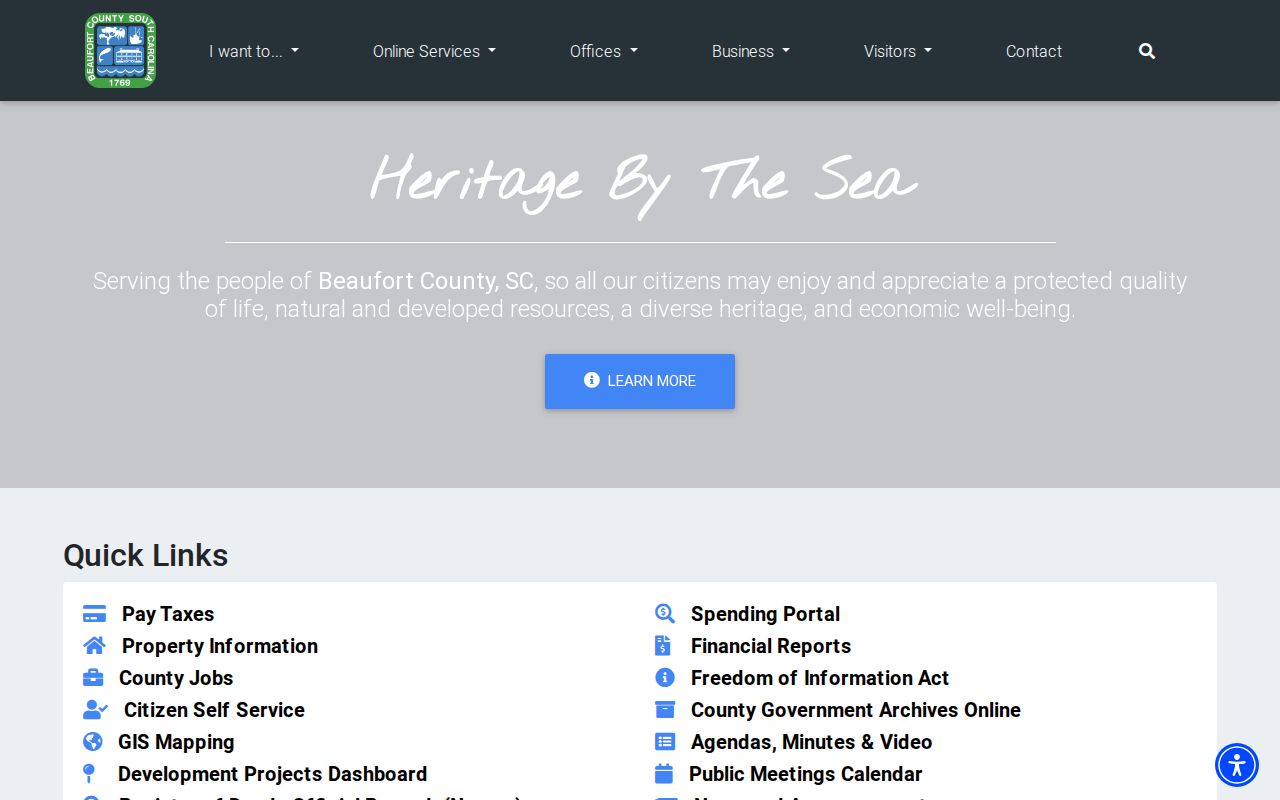
That county page is a routing hub, not a single database that merges every Beaufort County criminal record.
Search Beaufort Criminal Case Fields
The South Carolina Judicial Branch Public Index separates court records from jail and repository records. A case number is the cleanest key. Without one, use both name fields and a filing range. The Court Agency control can help separate General Sessions from a summary court when the interface offers it. A docket entry may describe an event without providing the document image, so the clerk remains the source for the actual filing.
| Search control | Best use | Limit |
|---|---|---|
| Case number | Exact known Beaufort County case | Keep punctuation shown on paperwork |
| Last, first, middle name | Party search with identity checks | A name alone does not prove identity |
| Date filed range | Narrow older or common-name results | Filing may follow arrest |
| Court agency | Limit results to a court layer | Some city coverage varies |
For the full court workflow and certified-copy route, use the Beaufort County Court Case Lookup.
Official Background Checks in South Carolina
The South Carolina Law Enforcement Division maintains the Computerized Criminal History repository. Its CATCH service is the normal public name-based product for reported South Carolina arrests and convictions. The standard fee is $25. A mailed request asks for a full name, aliases or maiden names, date of birth, and other identifying details; cash and personal checks are not accepted by mail. A mailed completed check should carry an original SLED stamp.
Fingerprints are the key that links an arrest cycle to the state repository. A person reviewing a federal identity history can use the FBI Identity History Summary route and submit fingerprints through an authorized provider or an IdentoGO location. Storefront hours and appointment supply change, so use the official finder rather than assuming walk-in service.
The SLED CATCH search screen shows the official state entry point.
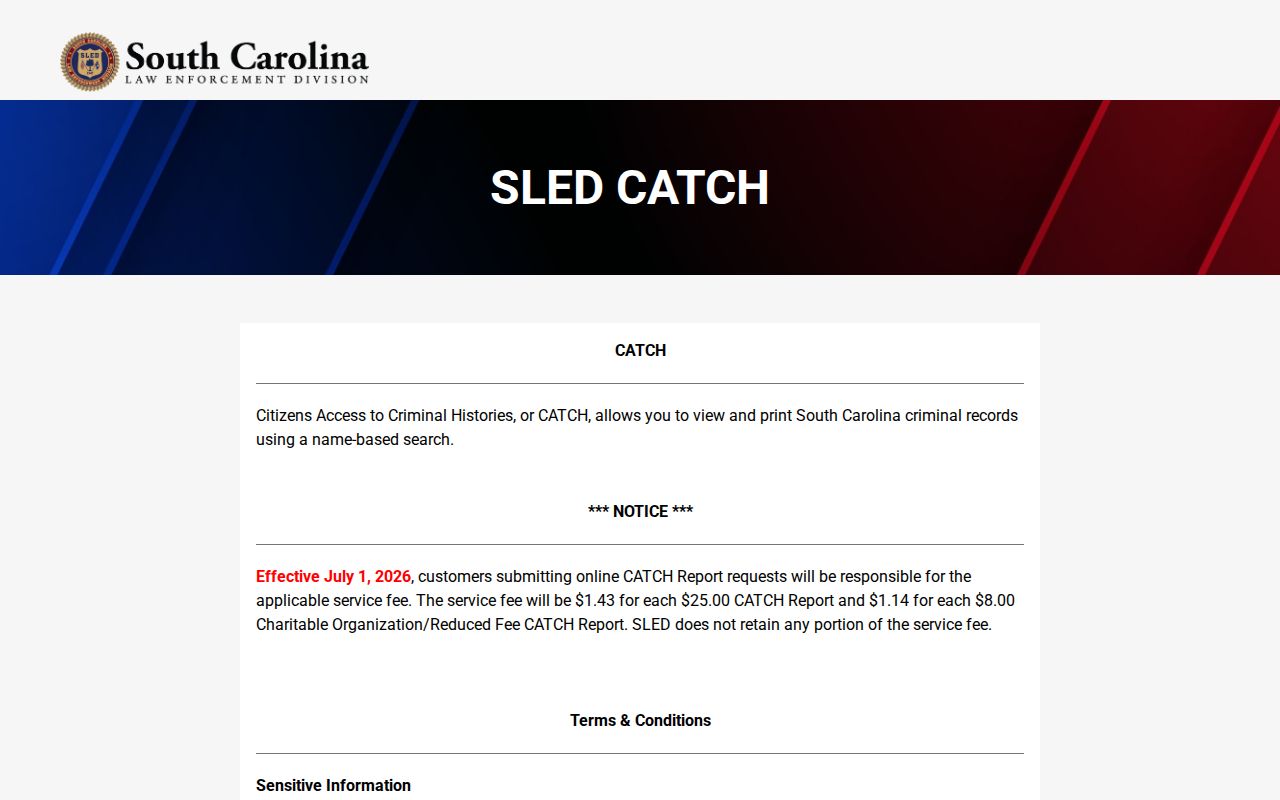
A CATCH result depends on fingerprint and disposition reporting, so compare it with the Beaufort County court file when an outcome matters.
Beaufort Records Have Separate Custodians
The close group of justice offices near Ribaut Road and Duke Street can look like one records campus, yet each counter has a distinct role. The Clerk of Court keeps General Sessions filings but does not set that court's dates. The Fourteenth Circuit Solicitor handles prosecution and rosters. Beaufort and Bluffton Magistrate Courts keep their own summary matters. The detention center controls booking and custody data, while BCSO or a city police department holds the report it created.
Clerk of Court
102 Ribaut Road, Suite 208
Beaufort, SC 29902
843-255-5057
Monday-Friday, 8 a.m.-5 p.m.
Beaufort Magistrate
104 Ribaut Road
Beaufort, SC 29902
843-255-5700
Monday-Friday, 8 a.m.-4 p.m.
Bluffton Magistrate
4819 Bluffton Parkway, second floor
Bluffton, SC 29910
843-255-5610
Monday-Friday, 8 a.m.-4 p.m.
Detention Center
2001 Duke Street
Beaufort, SC 29902
843-255-5200
Call for current access details
The Beaufort County Clerk page identifies its criminal-record contacts.
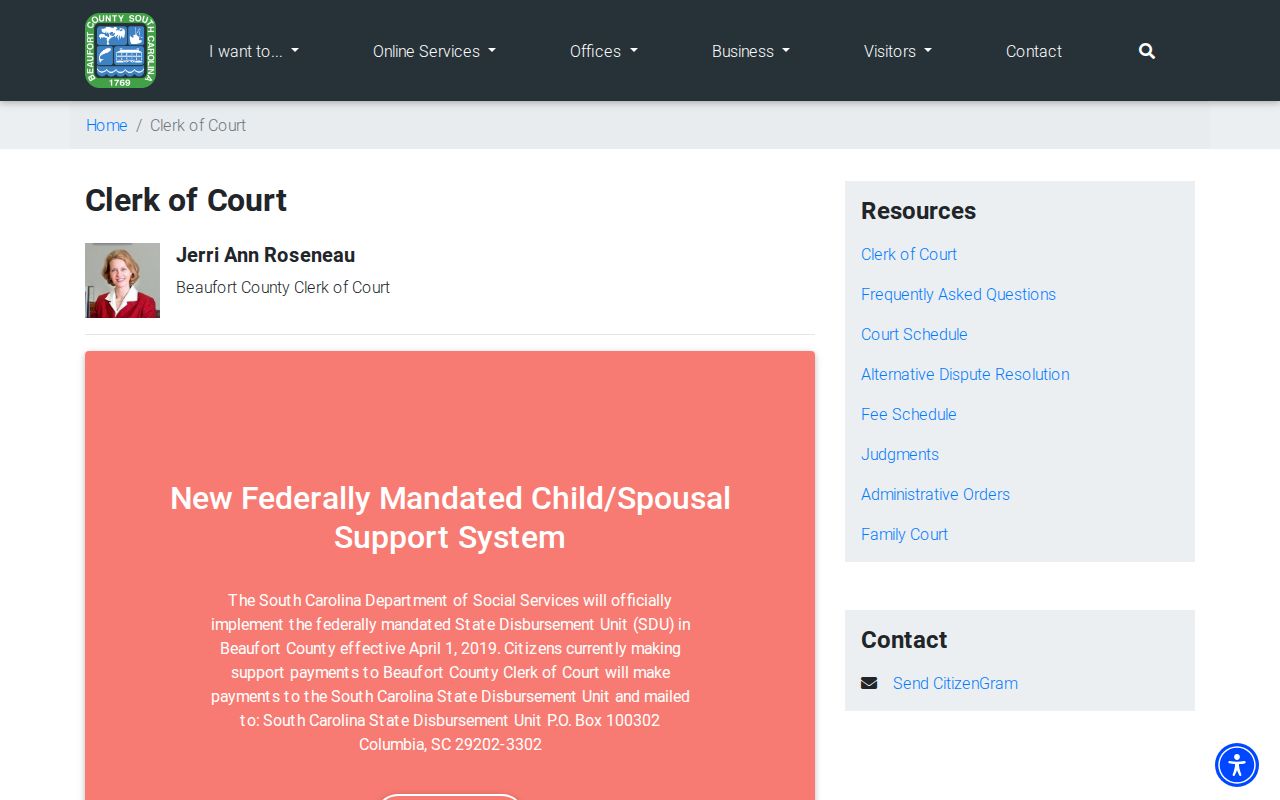
The separate criminal line helps route General Sessions record questions to the right Beaufort County desk.
Kinds of Criminal Records
A Beaufort County criminal history is assembled from records made at different stages. The event report starts with BCSO, Beaufort Police, Bluffton Police, or another agency. Booking adds an intake number, charges received, bond, and custody events. A court file then tracks the prosecution charge, hearings, disposition, and sentence. SLED compiles reported fingerprint-supported cycles, while SCDC and SCDPPPS cover later prison or community-supervision status.
- Incident and arrest reports: agency accounts of the event and probable-cause basis.
- Booking records: detention intake, booked charges, bond, and custody or release events.
- Court case files: filed charges, motions, hearings, plea or verdict, disposition, and sentence.
- State histories: SLED entries built from submitted fingerprints and reported outcomes.
- Custody and supervision: county jail, SCDC prison, and SCDPPPS probation or parole data.
Registry listings and warrants are distinct again. A registry record follows a qualifying conviction and statute. A warrant comes from a court and may remain restricted while unserved or sealed.
Beaufort Booking Is Not Prison Custody
The Beaufort County inmate inquiry covers people booked into the county detention system, including many who are awaiting trial. It offers current-inmate, recent-release, and daily-arrest views. A profile may show the booking number, intake time, arresting agency, charge descriptions, bond, and release status. Those fields record an intake event. They do not establish guilt or the final charge filed by the solicitor.
After a state sentence and transfer, use the South Carolina Department of Corrections Inmate Search. After community release, the SCDPPPS Offender Search may show current probation or parole information, though its public data reflects the prior day. VINELink can add custody notifications, but the record custodian remains the verification source.
The Beaufort County Detention Center page is the official county custody route.
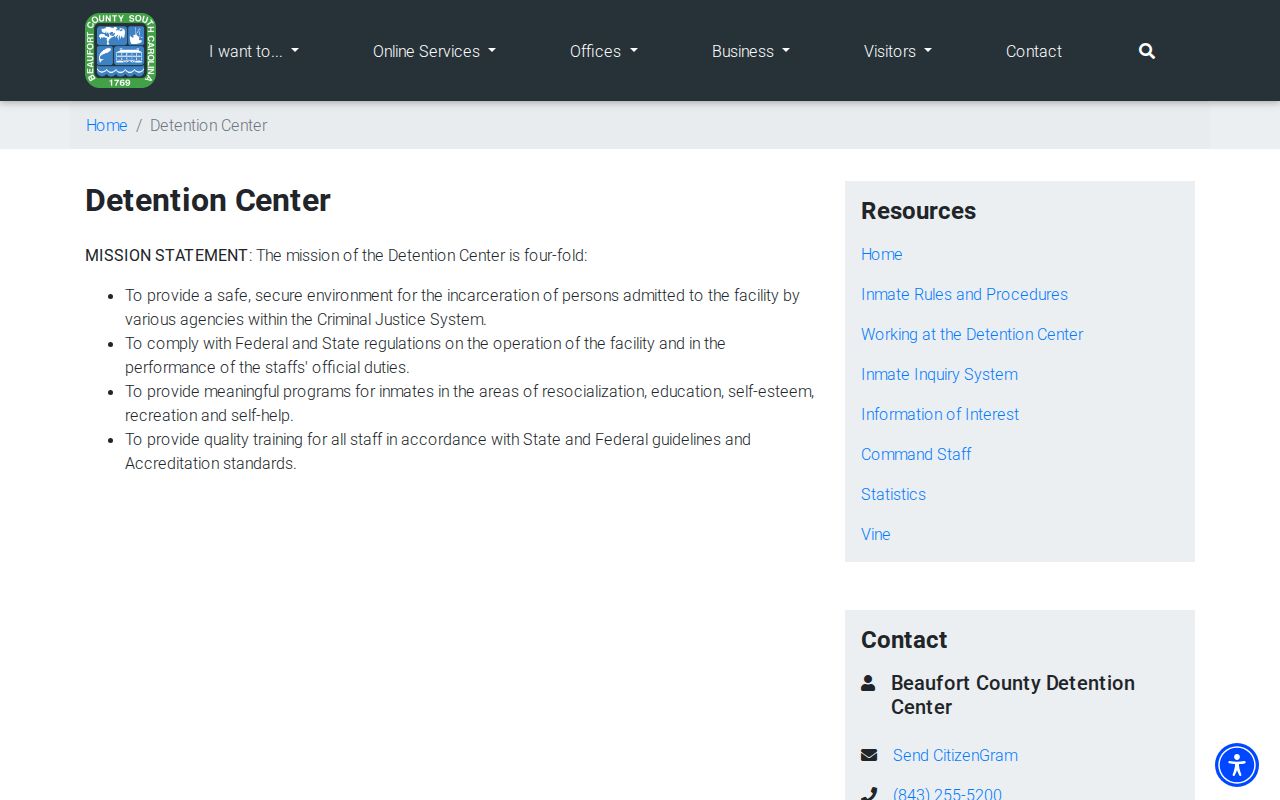
Use its information line when a live custody fact must be confirmed beyond the web inquiry.
Beaufort County Criminal Records: What They Contain
The contents change with the source. Public web products often suppress some identity data, and protected victim or juvenile details may be removed. A court case can show several charge rows with different results, so read each disposition rather than relying only on the case-level status.
| Name & Identifiers | Legal name, aliases, limited birth details, SID or FBI number when the product lawfully displays them. |
|---|---|
| Arrest / Booking Data | Date, arresting agency, control number, received charges, bond, and custody events. |
| Charges & Statutes | Booked allegation, later prosecution charge, offense description, and code citation. |
| Disposition | Conviction, acquittal, dismissal, nolle prosequi, or another charge-level result. |
| Sentence | Confinement, suspended time, probation, financial terms, and related orders when entered. |
| Custody / Supervision Status | County booking, SCDC custody, or SCDPPPS supervision, each maintained in a separate system. |
- Disposition
- The recorded outcome for a charge or case.
- Nolle prosequi
- The prosecutor's formal choice not to continue a charge at that time.
- Indictment
- A grand-jury accusation that moves an offense into General Sessions.
- Bond
- Release terms set before the case has been decided.
Fingerprints Link Beaufort Arrest Cycles
An arresting agency writes the report, and the Beaufort County Detention Center creates the booking file. Fingerprints then connect that arrest cycle to SLED's Computerized Criminal History repository. A magistrate or municipal judge handles bond and summary matters. General Sessions charges pass through the Fourteenth Circuit Solicitor and Clerk of Court. The final court outcome must return to SLED to complete the state entry.
Record flow: Arresting agency › Beaufort County booking › court charge and disposition › SLED repository.
The links can fail. SLED reported in 2026 that missing prints, direct indictments without later prints, changed charges, and slow disposition reporting can leave gaps. A no-result search therefore means that no matching public result was located, not that no record exists. Check the court and creating agency when a Beaufort County event is known.
South Carolina Public Access Laws
The South Carolina Freedom of Information Act gives inspection and copy rights, sets response rules, and permits reasonable search and production fees. It also allows redaction or withholding for protected law-enforcement details, privacy, confidential sources, and safety. Court indexes are public convenience copies. Certified evidence still comes from the clerk, and FOIA does not require an agency to create a new analysis that it does not keep.
Key Statutes:
S.C. Code §30-4-30 - sets public inspection, response, and fee rules.
S.C. Code §30-4-40 - lists exemptions for sensitive or harmful disclosures.
S.C. Code §23-3-110 et seq. - authorizes SLED criminal-record functions and dissemination.
S.C. Code §17-22-910 et seq. - governs qualifying expungement and destruction orders.
Narrow requests by agency, case or incident number, date, location, and document type. That helps the Beaufort County custodian find the record and estimate redaction or copy work.
Beaufort FOIA Routes and Fees
County FOIA Services is the general route for records held by county departments, but elected offices such as the Sheriff and Clerk may have their own custody duties. Send a BCSO-created report to BCSO. Send a city police report to the city that created it. County FOIA requests received after 4:30 p.m. on a workday count as received the next workday. Digital delivery is the default, with email used for files up to 15 MB and a secure download route for larger productions.
| Service | Published amount or rule | Office |
|---|---|---|
| General Sessions staff search | $25 | Clerk of Court |
| Clerk staff copy | $0.55 per page | Clerk of Court |
| Certified Magistrate copy | $0.50 per page | County FOIA schedule |
| FOIA deposit | Up to 25 percent of estimate | Record custodian |
| SLED CATCH | $25 standard name check | SLED |
The county FOIA instructions and fee route show how Beaufort County receives a focused request.
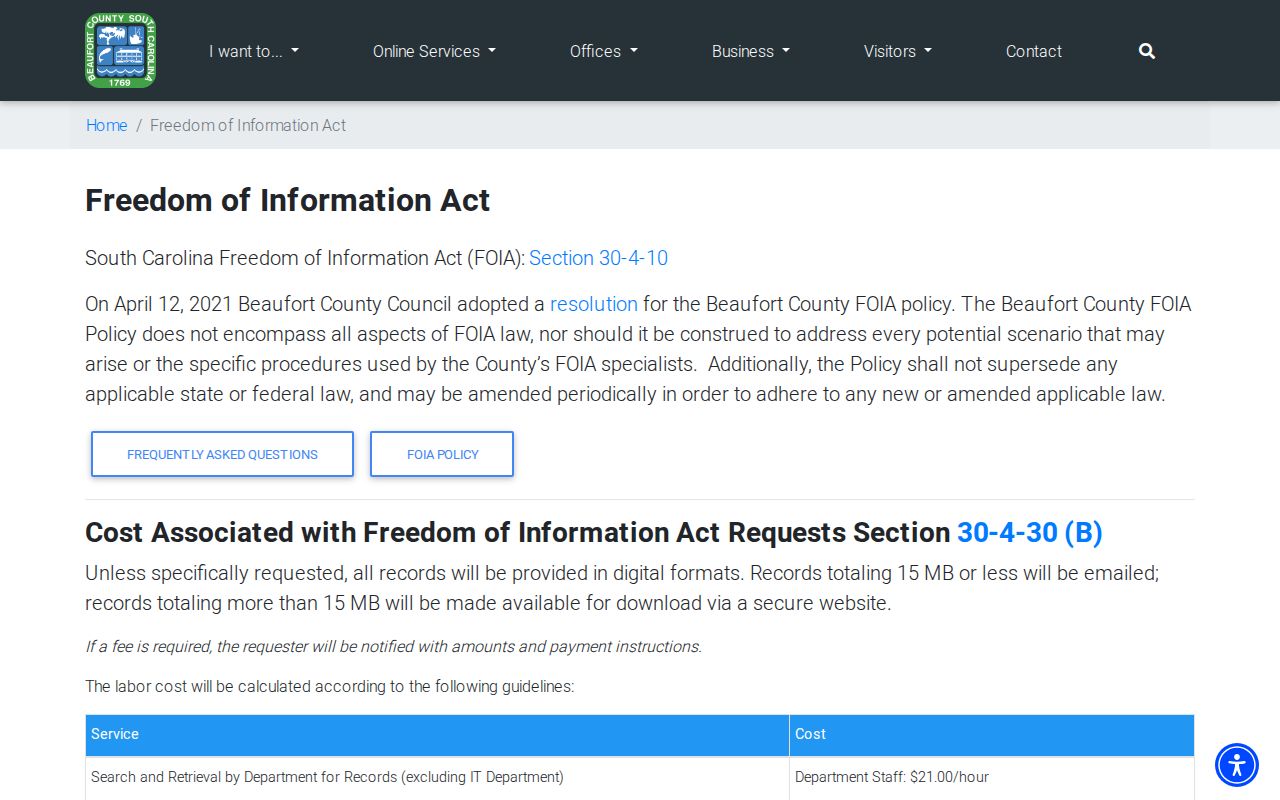
The form asks for contact details and a clear record description, with electronic delivery available.
The Clerk's official fee schedule separates court staff searches from page copies.
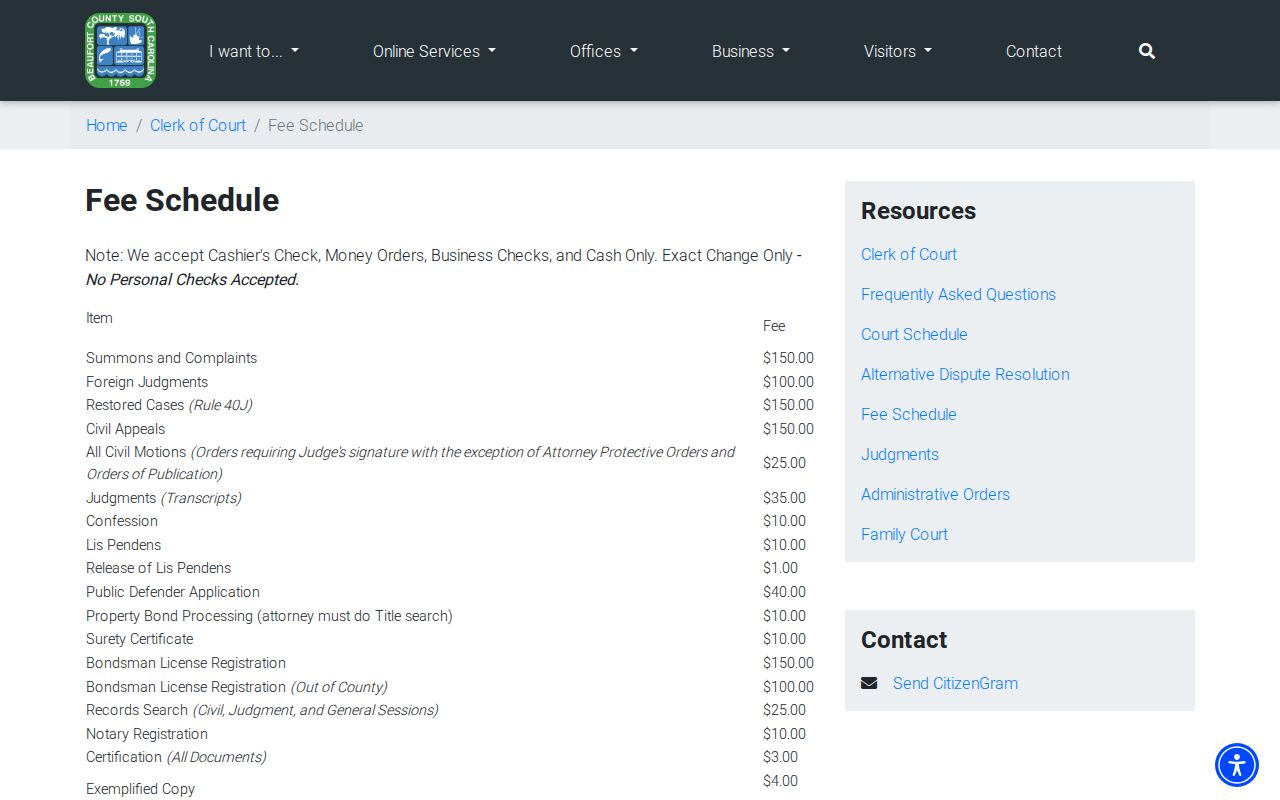
Having a case number can avoid confusion about whether a paid staff search is needed.
No Single Beaufort Warrant List
No authoritative countywide public name database for all active BCSO warrants was confirmed. An inmate roster is not a substitute because it shows executed bookings, not every open warrant. Check the issuing level: BCSO for sheriff-held information, Beaufort or Bluffton Magistrate Court for summary matters, the correct municipal court for its bench warrants, and Public Index for General Sessions docket clues.
A person concerned about their own warrant should call the issuing court or BCSO through a verified official number and ask what identity or case information is needed. A no-result search is not warrant clearance. The Clerk also warns that real court officials do not call and demand prepaid cards or phone payment for a missed-jury warrant; jury notices are mailed.
Only the issuing court or law-enforcement agency can confirm that a Beaufort County warrant has been resolved.
Restricted, Sealed & Expunged Records
General Sessions expungement starts with the Fourteenth Circuit Solicitor in the county of arrest. A qualifying dismissal from a Magistrate or Municipal Court goes through that issuing court. SLED does not originate relief and needs the proper Order for Destruction of Arrest Records before removing an eligible entry. Potential categories include some dismissals, completed diversion matters, certain first offenses, and qualifying youthful-offender cases; the exact statute and outcome control.
The usual chain is to obtain the disposition and current history, apply through the solicitor or summary court, complete the eligibility review, and ensure the certified order reaches each required agency. SLED asks applicants to allow about four weeks after it receives an order before checking again. A pardon is separate and does not itself erase the public record.
Juvenile records, victim identities, Social Security numbers, account data, and protected addresses are not ordinary Beaufort County public-index material. Redaction can preserve public access to the rest of a record.
Beaufort Supervision Uses State Systems
South Carolina Department of Probation, Parole and Pardon Services runs probation and parole through state county offices. Its Offender Search can use a name, SID number, county, and year of birth. The public system reflects the prior day's data and may omit people whose supervision has ended. For current Beaufort County status, use the live directory to reach county supervision staff, then compare the sentencing docket.
The Parole Hearing Search uses a name, SCDC number, and hearing month. Schedules are generally finalized about 30 days ahead and may change. The South Carolina parole and pardon search page presents those official hearing routes.
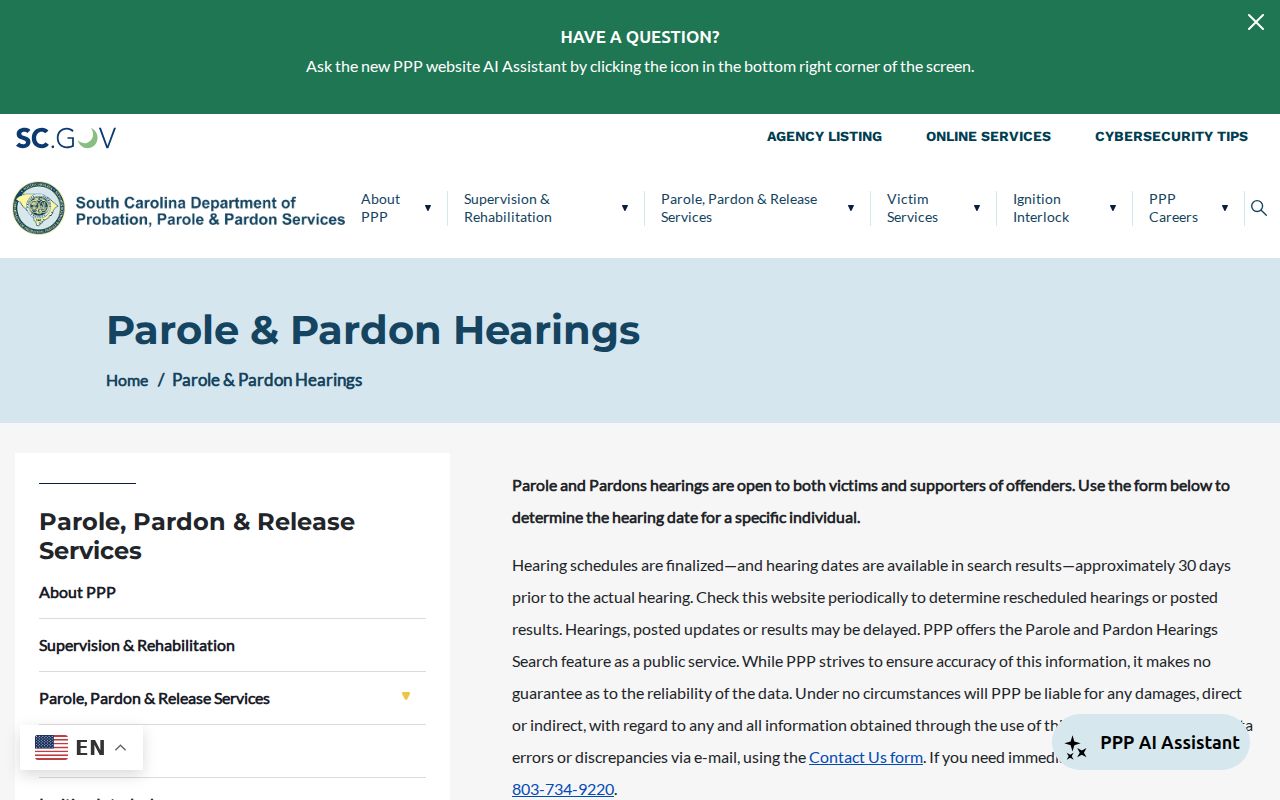
That state layer supplements the Beaufort County sentence entry; it does not replace the filed court disposition.
Beaufort Charges and Defense Records
South Carolina calls its elected prosecutor the Circuit Solicitor. The Fourteenth Circuit Solicitor serves Beaufort and four other counties, manages General Sessions prosecution, and handles many General Sessions expungement requests. The Solicitor can explain a prosecution or expungement status, but the Clerk remains the custodian of the filed court record and certified disposition.
The Fourteenth Circuit Public Defender represents qualifying appointed clients. Applications for covered General Sessions, Beaufort Magistrate, or Bluffton Magistrate matters begin at Clerk Suite 208 with warrants, tickets, and case papers. The published application fee is $40. The Beaufort County Public Defender page identifies the local process and contacts.
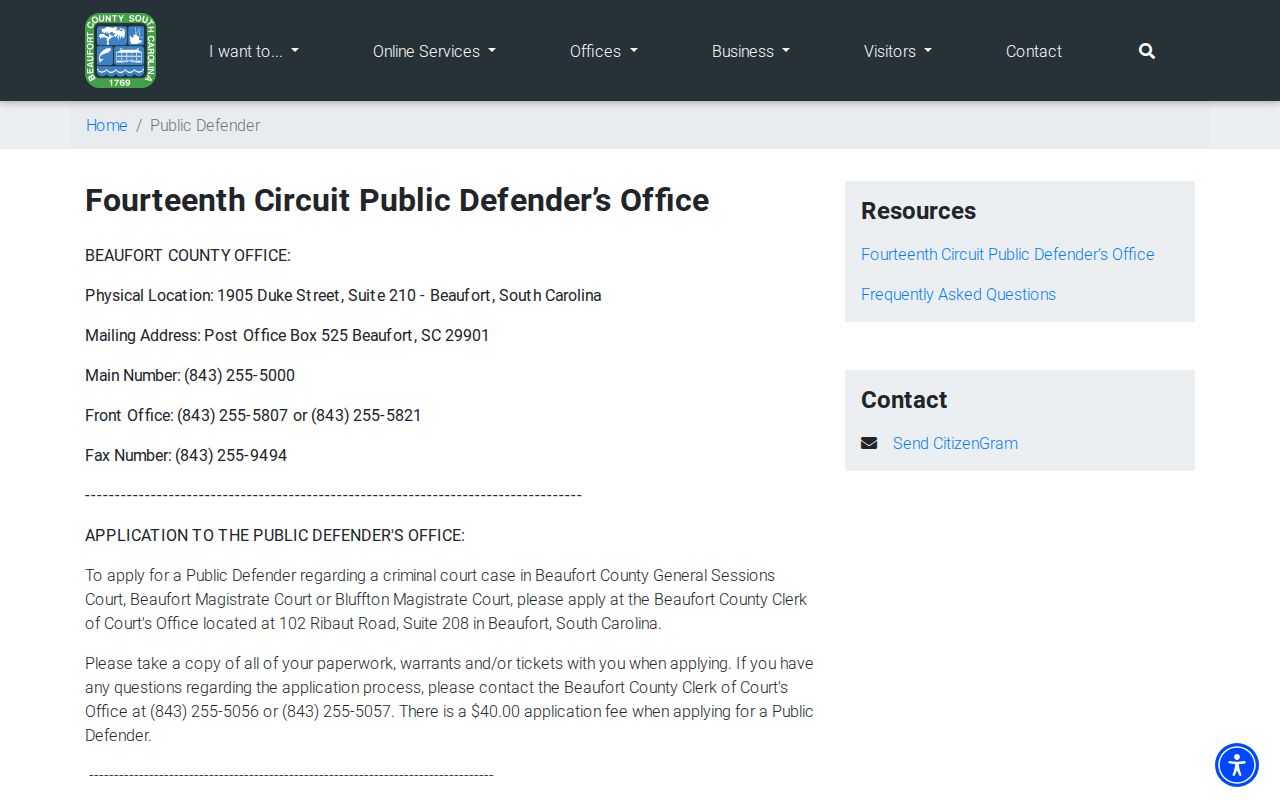
Neither the Solicitor nor defender office substitutes for the Beaufort County Clerk when a copy of a filed case document is required.
City-by-City Criminal Records in Beaufort County
City boundaries change the first records counter. Hilton Head Island contracts with BCSO for primary law enforcement, so a town address may still produce a sheriff report and county booking. Bluffton has its own police Records & Evidence unit, a Town Municipal Court, and a separate county Magistrate branch. The City of Beaufort keeps city police and Municipal Court records even though those offices sit near county justice facilities.
Hilton Head Island Record Check
BCSO contract policing and Town-created records follow different request routes.
Bluffton Record Check
Town police, Municipal Court, and county Magistrate records remain separate.
Beaufort Record Check
City police and court custodians are distinct from nearby county offices.
Use the agency name printed on a report or ticket. Geography alone does not identify who holds a Beaufort County criminal record.